
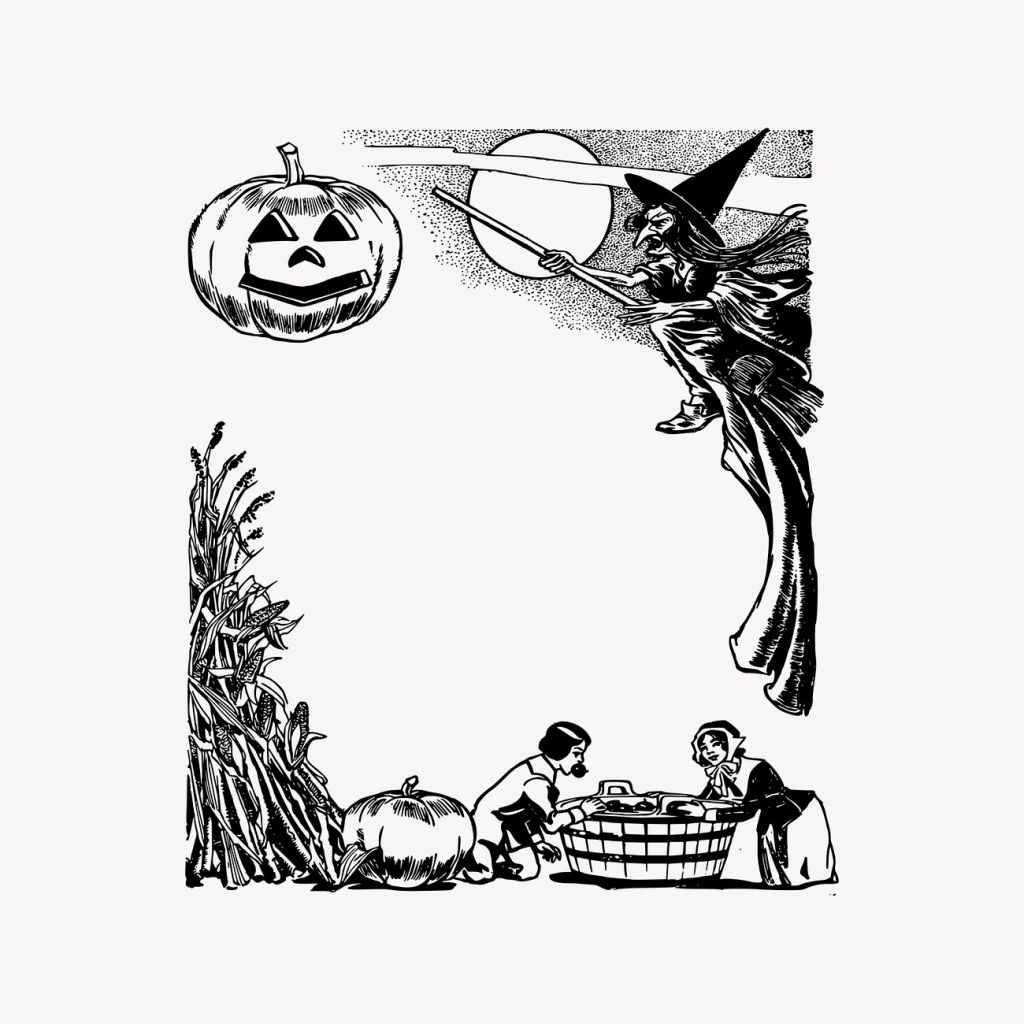
The history of Halloween shows us that it was not always what it is. Most of the traditions around Halloween have evolved throughout time. Not many of us still go Wassailing (The house-visiting wassail is the practice of people going door-to-door, singing and offering a drink from the wassail bowl in exchange for gifts), but we still have some element of it in our door-to-door visiting for sweet treats. Nor do we really ever retell our stories through mummers or guisers, but people/kids still dress up to express something that has influenced them.
Most of the fall traditions we have, focus around harvest. Mid-Fall is the closeout of harvest and the start of a new cycle. This is where Halloween comes into play. At one time, a primary Gaelic celebration called Samhain, was the celebration of the harvest coming to a close and the preparation of the cold months beginning. Often community bonfires were held, and other forms of celebration, all while taking stock of what they had for going into the cold months. There was some Irish Mythology that played into this day as well. They believed that, it was at this time, the vail between this world and the otherworld was thinned and allowed spirts to pass through willingly. Even though this was considered mythology, it persisted much through the first millennium until around 800 A.D. when the celebration was reworked into a Catholic Holiday (not much unlike Christmas and Easter). The Catholic Church had generated a holiday in 609 A.D. celebrated on May 13th called All Hallows’ Day. The Irish church struggled so much with the common pagan holiday of Samhain, and the false beliefs it put forward, that they decide to move their observance of All Hallows’ Day to November 1st. The rest of the Catholic Church followed suite and moved the official observance in 835 A.D.
All Hallows’ day was a day were the people would celebrate those who were hallowed (made holy, Saints) and is where we get the title for Halloween. Occurring on October 31, All Hallows’ eve started in the evening prior to All Hallows’ Day (note that in the original observance, people treated a day as sunset to sunset); later the title was smashed into one word, Halloween (this is called a portmanteau). All Hallows’ Day later had its title changed to All Saint’s Day and, in the 11th century, All Soul’s Day was added (a celebration and remembrance of all those who have died before us). This three-day observance was titled Allhallowtide and is where the Mexican holiday of Dia de Muertos (Day of the Dead) comes from.
There is another day of remembrance that occurs on October 31, and that is Reformation Day. This day of observance is focused around the start of the separation from the Catholic Church and the “reforming” of the church; creating a branch known as Protestant (those who protest). Anglicanism and Anabaptism were also birthed out of the Reformation Period. The reason the October 31 is picked for the day of observance is because on that day, in 1517 A.D., the German Monk Martin Luther had nailed his Ninety-five Theses to the doors of All Saints’ Church as a formal academic disputation of the selling of indulgence by the Catholic Church.
There is a lot of history and tradition here. When we look to days for remembrance, we allow those things to continue to influence us. So, whether you are choosing to celebrate a good harvest, or you are remembering those who had dedicated their life to the Christian faith, or maybe just remembering those who were part of our lives and are no longer here, or maybe even choosing to remember a day that drove the start of a branch of Christianity that makes up 1/3 of it’s whole, or do not do any of these things on this day, there is one thing I ask you to keep in mind.
Today is just a day. There is really no more significance on this day than any other day when it comes to being called to honor God and “One Another” those around us. Celebrating things that do not bring honor to God is not a single day choice; it is a daily decision whether to or not to honor Him. Also, it is impossible to one another with those around you if you do not engage with them; again, this is an everyday choice. If you choose to isolate yourself from those around you during the days that those around you are celebrating something that you do not acknowledge or believe to be wrong, you cannot be one anothering. And, if you are not one anothering, you are not honoring God. So take the time to honor God and openly communicate with those around you.
 Simplifying Christianity