
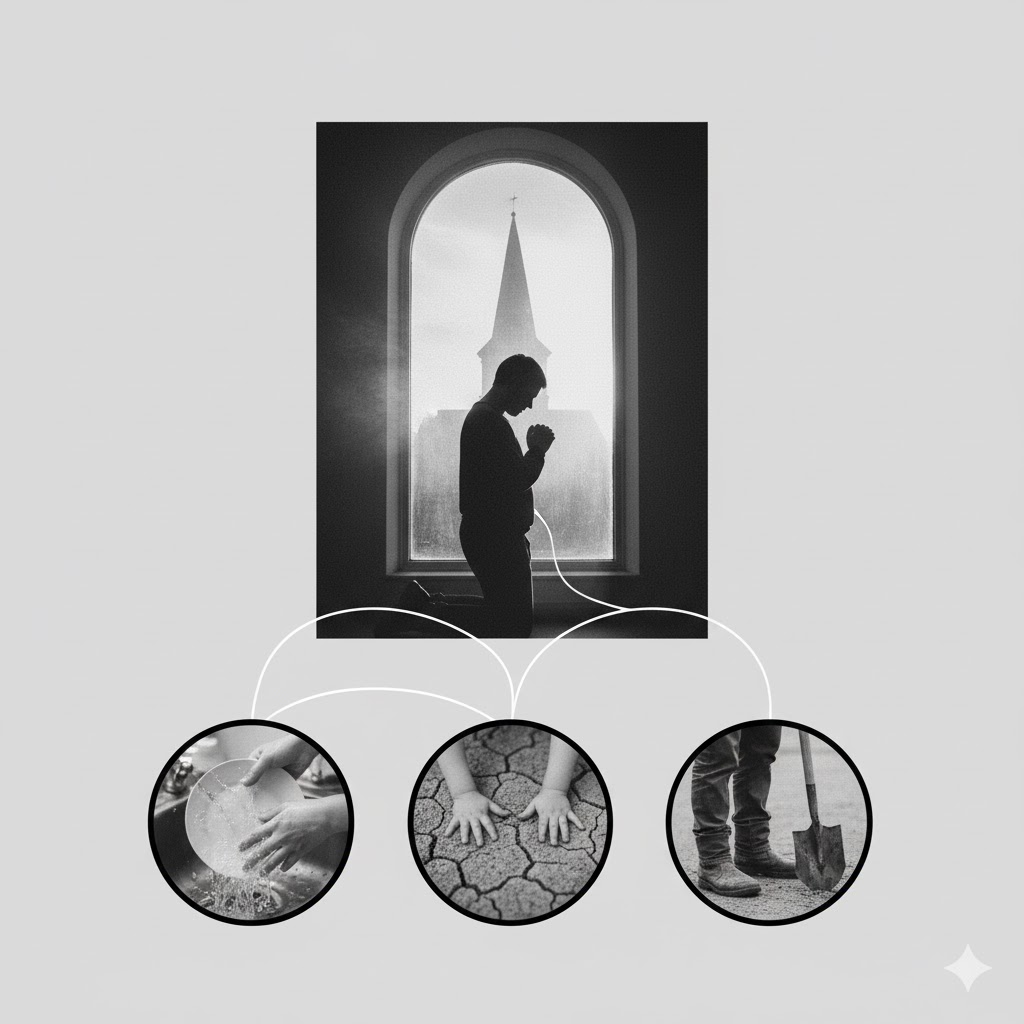
It’s become the default setting for the modern Christian life. You walk into church, the lights dim, the band kicks in, and for twenty minutes, you are engaged in “worship.” And for too many of us, that is exactly where the definition ends: a moment, a mood, a carefully curated playlist designed to give us an emotional high. We’ve taken the incredible, all-encompassing reality of worship—the act of recognizing and responding to God’s supreme worth—and we’ve managed to package it down into an easy-to-consume experience. We utilize it as a weekly spiritual reset button, a simple exchange where we offer our songs and in return, we expect a feeling of closeness to God. But in reducing our practice of worship to this, we have crippled the principle of worship. The truth is, the New Testament has a much larger, more challenging, and ultimately more straightforward vision for how we ascribe worth to our God. It’s not about the performance on a Sunday stage; it’s about the offering of your life on a Monday morning.
This shallow, modern understanding is a trendy distraction that we must re-evaluate. To Simplify Christianity, we must get back to the root of the matter. We need a fundamental realignment of what it means to offer our lives to God; it’s about what we do and the worth we are actively declaring. It’s a realignment of your life and an admission of who deserves to be on the throne.
Worth-Ship: The Simple Act of Declaring Value
The very root of our English word, worship, tells us the entire story. It comes from the Old English word weorthscipe, which literally means “worth-ship”—the act of recognizing and declaring something’s worthiness or value. When you worship something, you are stating, plain and simple: “This is the most important thing in my life. This holds the highest value.”
But this is not an event we take part in; it is a position of reverence.
This simple concept acts as the perfect bridge for understanding the ancient words that get translated as “worship” in the Bible.
The Ancient Language of Submission and Service
In the Hebrew Scriptures, the primary word translated as worship is Shachah (שָׁחָה). If you look up the definition, it’s remarkably physical: “to bow down,” “to prostrate oneself,” or “to do obeisance.” It’s an act of profound physical submission, a literal dropping to the ground to acknowledge the authority or power above you.
This is where we derive a lot of our posture for worship from. Whether it is us being on our hands and knees or us putting our hands in the air, we are essentially placing our bodies in a way that is driving focus away from ourselves and toward the one we are worshiping.
In the Greek New Testament, two words are crucial:
- Proskuneo (προσκυνέω): This is the most frequent word translated as “worship.” It literally means “to kiss toward,” often implying the act of prostrating oneself before a superior, like kissing the hem of a robe or the ground at a king’s feet. It is an act of adoration and humble submission.
- Latreuo (λατρεύω): This word is more specific. It means “to serve,” “to render service,” or “to perform religious rites.” It speaks not just of feelings or prostration, but of a commitment to duty and service to the divine.
The English word “worship” was chosen because it perfectly captures the essence of all three: it’s the worth you ascribe to someone that causes you to bow down (Shachah/Proskuneo) and dedicate your life in service (Latreuo) to them.
The Different Ways We Give Worth
Before we look at who we worship, we need to recognize the scope of how we do it. Worship isn’t a category of activity; it’s the posture of the heart informing all activity. The Scriptures lay out different ways we give worth to God:
- Adoration (Proskuneo): This is the familiar one—singing, prayer, and declaration of God’s goodness and power. It’s the moment we bow down and state His worthiness above all.
- Sacrifice/Service (Latreuo): As Paul says, present your bodies as a living sacrifice. This is the practical, daily worship of service. How you handle your money, how you speak to your neighbor, how you do your job—it all falls under latreuo. This is not just a prayer; it is a life of duty dedicated to God.
- Obedience: This is the ultimate form of giving worth. It’s saying, “Your command is more valuable than my desire.” This is the realigned life.
An interesting distinction I want to make here is that Latreuo sounds like our word Liturgy but they are not quite the same. It might sound like a simple correlation, but we must draw a necessary distinction between latreia (noun version of the verb latreuo) and the root of our English word, liturgy. The English “liturgy” comes not from latreia, but from leitourgia , which means “public work” or “service for the people.” This is where we get the idea of the ordered, corporate service of the church. However, this distinction is a gift. As we discussed in “The Habit of Advent,” genuine faith is built on intentional, daily practice. The communal liturgy (leitourgia) must therefore function as the necessary discipline and realignment that prepares us for the continuous, humble whole-life service (latreia) we offer to God in every moment.
The Critical Distinction of Worship: God Versus Jesus
Here is where we need to be crystal clear. If worship is giving worth, we must understand that the worth we give to the Almighty Creator, the Father, is distinct from the worth we give to His Anointed King, the Son, Jesus.
The Worship Due to God (The Father)
The Scriptures are uncompromising that there is only one ultimate recipient of Latreuo, or exclusive, ultimate service. This is God, the Father, the Creator of all things.
- When Jesus Himself was tempted, His response was the core principle of all worship: “You shall worship (Proskuneo) the Lord your God, and him only you shall serve (Latreuo).” (Matthew 4:10).
- God is the sole source, the one to whom all absolute, ultimate submission, duty, and sacrifice are directed. His worth is absolute and exclusive. He is the highest King, the ultimate recipient of latreia.
The Worship Due to Jesus (The Messiah)
We see clearly in the New Testament that people Proskuneo’d Jesus. They bowed down to Him. Why?
- He is the Messiah (Anointed King): Proskuneo is the act of obeisance due to a King or a superior. When people bowed to Jesus, they were recognizing His unique status as the Anointed Ruler sent by God, the promised King of Israel. His authority is derived from God, and He wields the power of the Kingdom.
- He is God’s Agent: Jesus’s worth is tied to His role as the inaugurator of God’s Kingdom on Earth. He is worthy of honor, devotion, and submission because God has made Him Lord and Christ (Acts 2:36).
The distinction is this: When we worship God (the Father), we offer ultimate, exclusive service (Latreuo) and devotion due to the sole Creator. When we worship Jesus, we offer the submission and honor (Proskuneo) due to the Messiah, the King appointed by God, who is our necessary access point to the Father.
Worship is the act of recognizing these distinct worths and acting accordingly. Acknowledging the absolute worth of the Creator and the regal worth of the King He appointed requires us to re-evaluate our lives in whom we direct our worship. We should position ourselves and our mind to be in submission to both God, as a creator and ultimate ruler, and the Messiah, as the appointed king over the current creation and those who pledge themselves to him. But, in the end, we fall to our knees for every aspect of life to God alone, the ultimate Creator of both the Body and Soul, the Universe and its Foundations.
In the End, We Begin
Here is the simplified, challenging truth: Your life is an ongoing act of worth-ship. It is a testament to who holds the highest value. The Scriptures demand a fundamental realignment of faith that moves beyond the emotional high of a Sunday service and anchors itself in the practical, humble offering of your every day.
Worship, then, is the act of recognizing these distinct worths and acting accordingly. When we get to the end of all the theological distinctions, we find ourselves at the beginning of a truly devoted life. We should position ourselves and our minds to be in submission to the King and to the Creator, but in the end, we fall to our knees in whole-life service to God alone.
Our worship isn’t a performance; it’s a posture that defines every moment until the Kingdom is fully realized. So, drop to your knees (Shachah), Dedicate your entire life (Latreuo), and give worth where worth is due.
 Simplifying Christianity